
Internal Teams Are Close. That’s a Strength. And a Risk.
Internal teams carry the day-to-day load.
- They support sales.
- They respond to leadership.
- They launch campaigns.
- They manage vendors.
- They report performance.
That proximity creates speed and accountability.
It also creates blind spots.
Over time, even strong teams can become buried in production. Messaging evolves incrementally. Assumptions go unchallenged. Strategy becomes reactive.
An external agency brings distance. And distance creates perspective.
That perspective makes it easier to ask uncomfortable questions:
- Are we actually differentiated?
- Has our positioning drifted?
- Is our website structured around what we want to own?
- Are we building authority or just producing content?

Research from Gartner shows companies with clearly defined positioning outperform competitors in long-term brand preference and conversion efficiency. Positioning clarity is not a design exercise. It is a strategic discipline.
Internal teams rarely have the time to step back and pressure-test it.
Capacity Is Not the Same as Strategic Focus
Many organizations have marketing capacity.
Fewer have protected time for strategic refinement.
Internal teams are stretched across:
- Content production
- Sales enablement
- Campaign launches
- Reporting and analytics
- Social and email execution
- Executive requests
When output dominates the calendar, strategic clarity slips.
Meanwhile, discovery behavior keeps evolving.
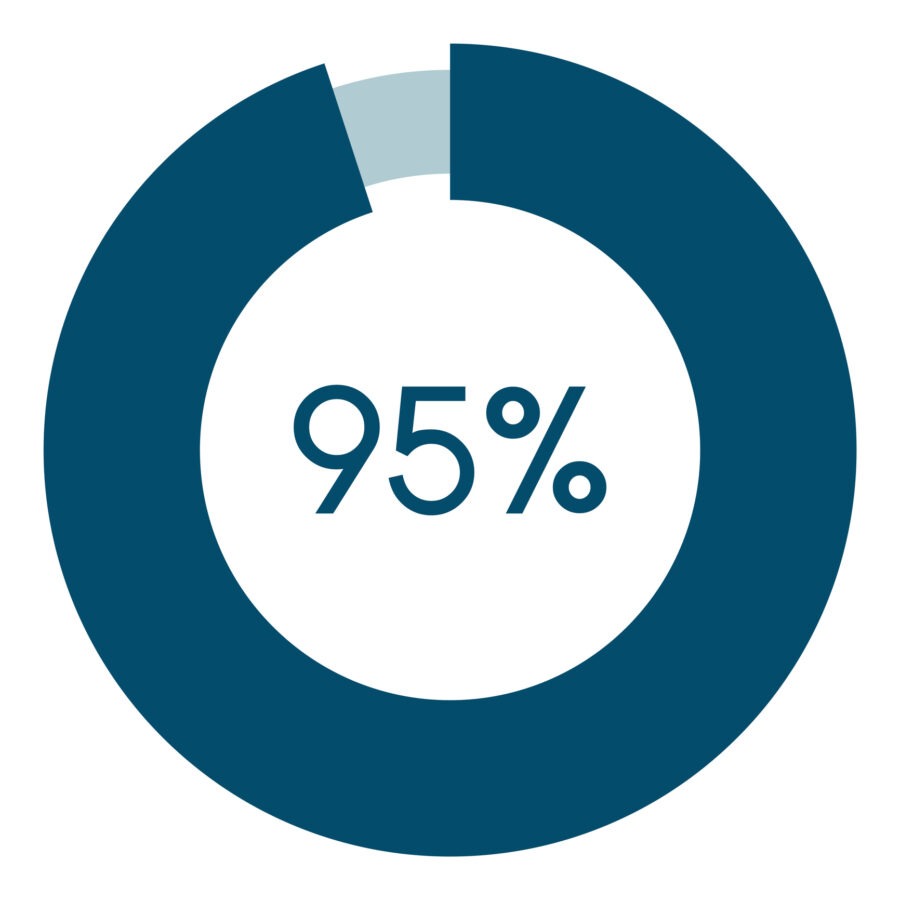
Roughly 95 percent of search queries now involve machine learning in how results are ranked and interpreted. Buyers are encountering brands through AI-generated summaries before they ever click a link.
That shift requires structural clarity.
- Is your website organized around defined areas of authority?
- Is terminology consistent across channels?
- Is service architecture clear to both humans and AI systems?
Agencies can focus on those structural questions while internal teams maintain operational momentum.
It is about protecting strategy, not replacing execution.
Marketing Infrastructure Has Become More Technical
In the past, marketing conversations focused heavily on messaging and creative.
Today, structure plays a larger role.
Companies using structured content models, with clear pillar pages supported by related subtopics, can see significantly stronger organic growth than those publishing disconnected content. HubSpot research has shown up to three times the traffic growth when content is intentionally organized.
That kind of architecture does not build itself by accident.
It requires:
- Defined positioning
- Clean internal linking
- Consistent service naming
- Clear page hierarchy
- Schema markup and crawlable structure
Pages that use structured schema markup can see 20 to 30 percent higher click-through rates in search results because systems can categorize them more accurately.

Internal teams often know these elements matter. What they lack is time to rebuild infrastructure while campaigns are live.
An agency can step into that gap.
Agencies Reinforce Discipline
As companies grow, complexity increases.
- Sales pushes for new collateral.
- Leadership reacts to competitors.
- Boards suggest new markets.
Marketing absorbs the pressure.
Without guardrails, messaging expands to accommodate everyone. Positioning softens. Focus blurs.
A strong agency relationship reinforces discipline:
- Clear audience targeting
- Defined service boundaries
- Consistent messaging
- Long-term priorities
That discipline compounds over time. It prevents drift.